Garlic Mashed Potatoes with Warm Milk and Butter
Garlic mashed potatoes make a soft, savory side for a Thanksgiving table or an ordinary roast dinner. The garlic simmers with the potato chunks, so its flavor becomes gentle without needing a separate roasting step. Warm milk and melted butter then loosen the mash without cooling it sharply.
This recipe makes six side portions from 900 g of peeled yellow potatoes. The finish is creamy and lightly textured rather than perfectly whipped. Garlic mashed potatoes are especially useful beside dishes with crisp edges, tangy sauces or a little gravy.
Why cook the garlic with the potatoes?
Whole peeled cloves soften in the same water as the potatoes and become easy to mash. Their flavor is milder than raw minced garlic stirred into finished potatoes. Keeping the cloves whole also makes them easier to drain with the chunks.
Starting in cold water helps the pieces heat more evenly from the outside inward. A steady simmer is enough once the water boils. A violent boil can knock the corners off while the centers are still firm.
Ingredients and potato choices
Use 900 g peeled yellow potatoes, four medium garlic cloves, 200 ml whole milk, 60 g unsalted butter, 1/2 teaspoon fine salt and 1/4 teaspoon black pepper. Finely chopped chives are an optional finish. The recipe card carries the same quantities in one place.
Yellow potatoes give a naturally creamy texture. Russets can also make a fluffy mash, but they may need a slightly different amount of milk. Red or very waxy salad potatoes tend to produce a denser result, even with the same method.
Measure the potatoes after peeling and trimming damaged areas. Buying a little extra avoids ending up short. Cut them into roughly 1-inch (2.5 cm) chunks so the small pieces do not fall apart long before the largest pieces soften.
Peel the garlic and trim its dry root ends. Four medium cloves provide a noticeable but gentle flavor; unusually large cloves can weigh considerably more. Use the approximate 12 g weight if your garlic heads are very variable.
Whole milk makes the finish rounded without being as rich as cream. Unsalted butter keeps seasoning more predictable. If using salted butter, begin with less of the measured salt and taste before adding more.
Equipment and texture
A large pot, colander, small saucepan and hand masher are enough. A potato ricer gives a finer texture, but the garlic may need an extra pass through the masher. The potatoes should be hot while you work so they break down easily.
Avoid a blender or food processor. Their blades work the starch aggressively and can turn the mixture sticky. An electric mixer can also overwork potatoes quickly, so hand mashing is the simplest way to control this batch.
How to make garlic mashed potatoes
1. Simmer until fully tender
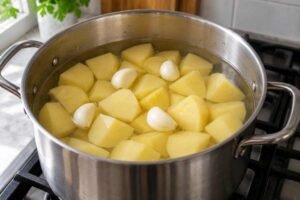
Put the potato chunks and garlic in the pot and cover with cold water by about 1 inch (2.5 cm). Lightly salt the cooking water. Bring to a boil, reduce the heat and simmer for 15–20 minutes.
Test a large chunk, not just a small corner piece. A fork should pass through the center with little resistance. If the center feels firm, keep simmering and check again before draining.

2. Drain well and warm the dairy
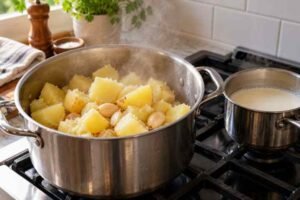
Drain thoroughly and return the potatoes and garlic to the warm pot off the heat for 2 minutes. Let steam escape rather than putting the lid back on immediately. This removes some surface moisture without browning the potatoes.
Warm the milk and butter over low heat just until the butter melts. Do not boil the milk or leave it reducing while you finish other food. It should be warm and ready to fold into the mash.

3. Mash by hand and add liquid gradually
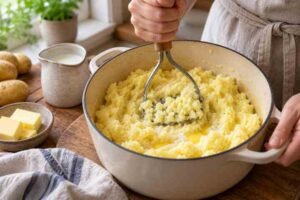
Mash the hot potatoes and garlic until no large firm pieces remain. Fold in about three-quarters of the warm milk mixture, then add the rest a little at a time. Stop when the texture is soft and spoonable.
Stir in the measured salt and pepper and taste before adjusting. Add optional chives at serving. If a little liquid remains because your potatoes were particularly moist, keep it for loosening leftovers rather than forcing it into the bowl.

Controlling moisture without overmixing
Garlic mashed potatoes should settle gently on the spoon, not pour from it. Draining thoroughly is the first control point; adding the dairy gradually is the second. Potato variety, chunk size and how long the pieces sit in water can all affect the final texture.
If the mash looks stiff, fold in warm milk a tablespoon at a time. Use a broad spoon or spatula and make only a few strokes between additions. Repeated vigorous stirring is more likely to make potatoes gluey than to make them smoother.
If it is too loose, return the pot to very low heat briefly and fold gently while a little moisture evaporates. Keep moving the base so it does not scorch. Do not add raw flour or cornstarch to the finished mash.
Substitutions and optional additions
For a dairy-free version, use an unsweetened plain plant milk and a suitable dairy-free butter by weight. Choose a neutral flavor; sweetened vanilla drinks will make this savory side taste different.
A small spoonful of sour cream can replace some milk for a tangier finish. Add it off the heat and expect a slightly thicker texture. Cheese is not included in the base recipe; if added, its salt and richness will change the nutrition.
Chives can be replaced with a small amount of finely chopped parsley. Keep garnish modest so it does not overpower the cooked garlic. Extra butter on top is a serving option and is excluded from the stated nutrition.
Make ahead, storage and reheating
Freshly mashed potatoes are easiest to keep creamy, but this batch can be made one day ahead. Transfer to shallow containers, cool promptly and refrigerate at 40°F (4°C) or below. Do not leave the pot sitting on a switched-off stove for hours.
Use refrigerated leftovers within 3–4 days. Reheat with a splash of milk until the center reaches 165°F (74°C), following USDA reheating guidance. Stir microwave portions partway through heating for a more even temperature.
Refrigerate perishable food within 2 hours, or within 1 hour above 90°F (32°C). Freeze cooled portions for up to one month for best texture and thaw in the refrigerator. Some separation after freezing is normal; warm gently before folding the mixture back together.
Serving ideas
Pair this mash with air fryer chicken breast and cranberry apple slaw for a plate with soft, crisp and tangy elements.
For a gathering, add roasted butternut squash and chickpea salad as a separate vegetable option. A small baked pear with cinnamon makes a simple finish.
Frequently asked questions
Can I leave the skins on?
Yes, if the potatoes are scrubbed well and you like a rustic texture. The stated peeled weight and smoothness assume the skins are removed.
Can I use roasted garlic instead?
Yes, but that is a different flavor and requires a separate cooking step. Add soft roasted cloves during mashing rather than simmering them again.
Why are there lumps?
The potatoes may not have cooked fully, or they cooled before mashing. Check the largest chunk for tenderness and work while the potatoes are hot.
Can I double the batch?
Yes. Use a pot large enough to cover the chunks comfortably, keep the cut size consistent and add the warmed milk gradually rather than all at once.
A soft side for a holiday dinner
Garlic mashed potatoes stay straightforward when you simmer evenly cut chunks, let them steam dry and fold in warm dairy gently. Serve these creamy yellow potato mashed potatoes with your favorite Thanksgiving vegetables, keeping a little warm milk available if the bowl needs loosening.


Garlic Mashed Potatoes with Warm Milk and Butter
Ingredients
Method
- Put potato chunks and peeled garlic in a large pot. Cover with cold water by about 1 inch/2.5 cm and lightly salt the water. Bring to a boil, then reduce to a steady simmer. Cook 15–20 minutes until a fork passes easily through the largest potato chunk.

- Drain potatoes and garlic thoroughly, then return to the warm pot off the heat for 2 minutes to let excess moisture escape. Meanwhile, warm the milk and butter in a small saucepan over low heat until the butter melts; do not boil.
- Mash the hot potatoes and cooked garlic by hand. Fold in about three-quarters of the warm milk mixture, then add the rest gradually until soft and spoonable. Stir in the measured salt and pepper, taste and adjust if needed. Top with optional chives and divide into six side portions.
Notes
Get fresh recipes in your inbox
Subscribe to PlateWiser for easy dinners, small-batch treats, and coffee recipes.
Confirm your email to join. Unsubscribe anytime.