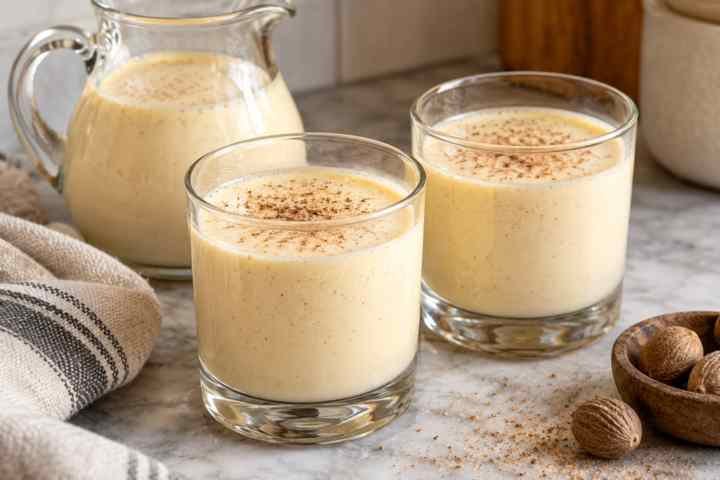
Strawberry Lemonade Concentrate Canning: Pint-Jar Guide
Strawberry lemonade concentrate canning lets you preserve a sweet-tart fruit base, then mix individual glasses of lemonade when you open a jar. This guide follows Ball’s published strawberry lemonade concentrate recipe, with pint jars and a boiling-water process.
The preserve is concentrated: water, ice and optional garnishes belong in the serving glass after opening. Keep the canning formulation unchanged. The printable card contains the measured ingredients and complete method; the sections below explain equipment, altitude, seals and serving choices.
Jump to the printable canning recipe
What Strawberry Lemonade Concentrate Canning Produces
Think of the finished product as a lemonade starter rather than a ready-to-drink beverage. Strawberry pulp contributes body, lemon juice contributes tartness and sugar gives a concentrated sweetness. A small amount in a glass can be diluted gradually to the strength you enjoy.
The published yield is approximately seven US pint jars, but fruit and handling can affect the amount actually collected. Prepare the jars before you begin and keep any amount too small for the specified fill refrigerated for prompt use. Do not top up the batch with water to reach an expected jar count.
Keep the Canning Ingredients Fixed
Use the ingredients and amounts in the card. The strawberry measure refers to hulled fruit before pureeing. Bottled lemon juice is required in this version; fresh lemons used as serving decorations are not a replacement for the measured ingredient.
For strawberry lemonade concentrate canning, changes to the preserved mixture need a separately tested method. Do not turn it into a different fruit concentrate, add herbs, reduce the lemon juice or improvise a sugar-free version and assume the same process applies. Personalize the opened drink instead.
A kitchen scale can be useful in many recipes, but this source specifies cup measures. Follow those measures rather than inventing a new weight conversion for a safety-sensitive formulation. Keep a clear distinction between the amount of fruit measured and the puree produced.
Equipment for Strawberry Lemonade Concentrate Canning
Use a boiling-water canner with a rack and lid, suitable for your stove. The pot needs enough depth to cover the filled jars with water while leaving space for boiling. A rack holds the jars above the pot bottom. Check a smooth-top stove’s instructions for canner compatibility.
Have pint canning jars, compatible new flat lids, bands, a jar lifter, funnel, bubble remover, headspace gauge and food thermometer ready. A blender and large stainless-steel saucepan handle the fruit base. Ordinary beverage bottles and decorative storage jars are not substitutes for canning equipment.
Inspect the jars for damage and follow the lid maker’s preparation instructions. A chipped rim can interfere with sealing. Arrange a clean towel-covered cooling space before the canner is full so hot jars have somewhere stable to stand.
Strawberry Lemonade Concentrate Canning: Six Stages
1. Prepare the canner and jars
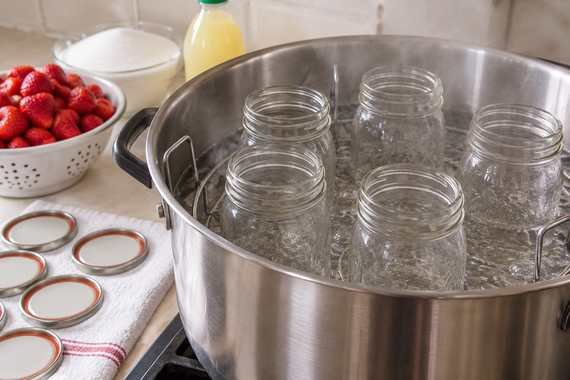
Read the complete card and identify your elevation before starting. Keep the jar lifter, headspace tool and clean lids within reach. Organizing the equipment first helps you move from heating to filling without leaving hot concentrate waiting on the counter.
2. Puree the strawberries

Work in blender batches that fit the appliance comfortably. Keep the blender on a stable surface and follow its capacity instructions. Smooth puree is the intended base; leave the exact fruit measure unchanged and do not replace it with a different quantity of pre-made fruit sauce.
3. Heat the concentrate

Use the thermometer to check the mixture rather than guessing from steam. Keep its sensing tip in the food without resting it against the pan bottom, following the thermometer’s instructions. Watch the pot while stirring and follow the temperature endpoint in the card.
4. Fill and close the jars
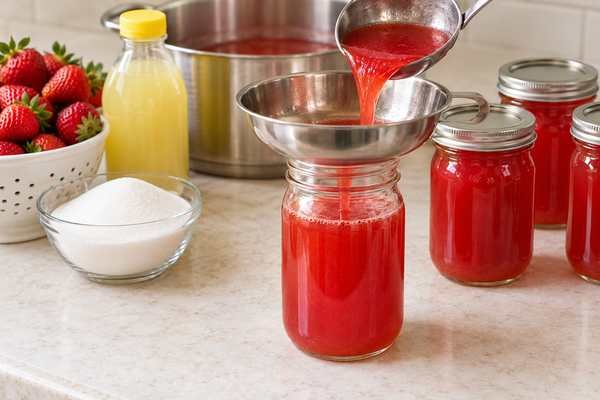
Headspace is the empty distance between the food surface and the jar rim. Measure it with a proper gauge, not by estimating from a photograph. After releasing bubbles, check the space again. Keep the sealing surface clean before putting on a lid.
5. Process for your elevation
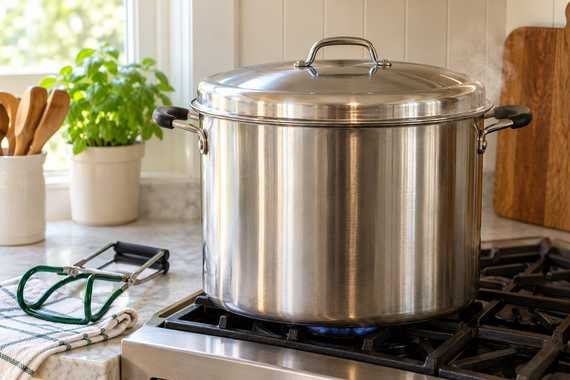
Start the canning timer once the covered canner reaches a full boil. The timer is for the processing stage, not the earlier warming period. Keep the boil going throughout; if it stops, restore it and restart the full adjusted processing time.
6. Cool and check seals
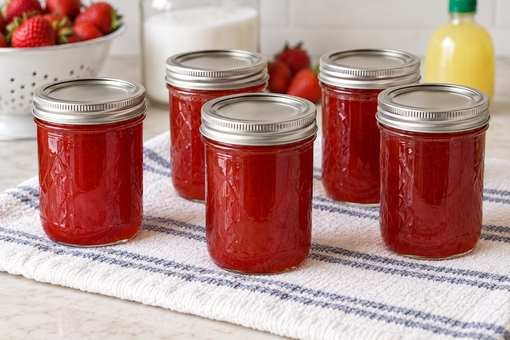
Let cooling finish before checking lids. A ping is not a substitute for a seal check, and a sealed lid cannot make an incorrectly formulated or underprocessed batch safe. Only jars prepared and processed according to the tested directions qualify for pantry storage.
Altitude Table for Strawberry Lemonade Concentrate Canning
The table applies to US pint jars for this recipe. It adds the increments in Ball’s altitude guidance to the base process. Elevation is the height of your canning location above sea level, not the temperature outside.
| Elevation in feet | Total processing time |
| 0–1,000 | 15 minutes |
| 1,001–3,000 | 20 minutes |
| 3,001–6,000 | 25 minutes |
| 6,001–8,000 | 30 minutes |
| 8,001–10,000 | 35 minutes |
For processing over thirty minutes, NCHFP recommends two inches of water above the jar tops. Maintain the water level with boiling water added around the jars if needed. Above 10,000 feet, ask your local Extension food-preservation service for guidance rather than extending the table yourself.
Cook’s Notes: The Important Checks
This is a source-based guide, not a claim of independent laboratory testing by Platewiser. Its canning formulation comes from Ball, while the general canner, cooling and storage advice comes from the National Center for Home Food Preservation. Use the written measurements and a headspace tool when filling jars.
Keep a record of the date, altitude and actual processing time. If the method was interrupted or an ingredient was changed, do not treat a vacuum seal as proof of safety. Seek guidance for the specific situation before deciding whether to store a batch.
Cooling, Failed Seals and Pantry Storage
The NCHFP seal-check guidance explains cooling and checking two-piece lids. Once fully cool, remove bands and press the lid center: a lid that springs back is unsealed. Do not tighten a warm band to try to force a seal.
If a correctly prepared and processed jar fails to seal and you discover it during the normal checking period, refrigerate it and use within several days. Reprocessing is a separate procedure with a limited window; follow NCHFP’s full instructions if considering it. An incorrectly processed batch needs specific guidance, even when lids appear sealed.
For sealed jars, wash off residue, dry, label and store without bands in a cool, dark, dry place. NCHFP recommends 50–70°F for best quality and planning to use home-canned food within a year. Avoid hot, damp or sunlit storage areas.
Before opening, inspect the jar and seal. Do not taste a suspect jar to decide whether it is safe. Mold, leaking, bulging or other spoilage signs call for disposal using appropriate food-preservation guidance. Refrigerate opened concentrate and prepared lemonade, and use promptly.
How to Dilute the Opened Concentrate
As a serving starting point, mix one part concentrate with three parts cold water. For example, combine half a cup concentrate with one and a half cups water, stir and taste before adding ice. This ratio is a serving suggestion, not a step in strawberry lemonade concentrate canning.
Adjust the opened drink by adding more water for a lighter flavor or less for a stronger one. Sparkling water can be added gently at serving. Fresh mint, a lemon slice or extra berries belong in the glass after opening; they are not additions to the preserved jars.
For a gathering, open and mix only what you need, keeping unused concentrate cold. A pitcher can make serving easier, but count the concentrate used when estimating calories. Extra water spreads the same sugar across a larger drink volume.
Strawberry Lemonade Concentrate Canning FAQs
Can I use quart jars?
This guide supplies pint-jar directions. Do not assume a larger jar has the same heating behavior or processing time. Use a published tested process for another jar size rather than inventing an adjustment.
Can I add water before canning?
Keep dilution for after opening. Adding water changes the preserved formulation. If your goal is a ready-to-drink lemonade, use a method specifically developed for that product.
Can I use fresh lemon juice?
Use the bottled lemon juice specified in the card. A fresh lemon can decorate a serving glass, but it does not replace a required canning ingredient.
Can I use fewer jars if my yield is smaller?
The number filled may differ; the jar size, headspace and full processing time still apply. Do not change the formulation or fill an undersized remainder to an incorrect headspace just to finish the pan. Refrigerate that remainder for prompt use.
Does a sealed lid prove the batch is safe?
No. A seal shows a vacuum formed; safety also depends on the formulation, filling method and correct process. Follow the full method rather than relying on the sound of a lid or its appearance.
What to Serve With Strawberry Lemonade
For a small dessert pairing, try our small batch oatmeal cookies or Greek yogurt dessert cups. Our small batch brownies are another option when you want a richer sweet alongside a tart drink.
A Strawberry Drink Base for Later
Strawberry lemonade concentrate canning is most useful when the preservation steps stay fixed and the serving glass stays flexible. Follow the tested method, choose the correct altitude time and dilute after opening. Follow Platewiser on Pinterest for more drink and recipe ideas.
Calories and Nutrition
| Portion | ½ cup concentrate, before dilution |
| Calories | About 190 kcal |
| Carbohydrates | About 48 g |
| Sugars | About 45 g |
| Protein | Less than 1 g |
| Fat | Less than 1 g |
These are estimates assuming a final yield of seven pints: fourteen cups total, or twenty-eight half-cup portions. Fruit packing, yield and ingredient labels vary. Recalculate using the actual finished amount if yield differs. Half a cup concentrate mixed with water still contains the concentrate’s calories; it produces more than one cup of prepared drink.
Printable Canning Recipe
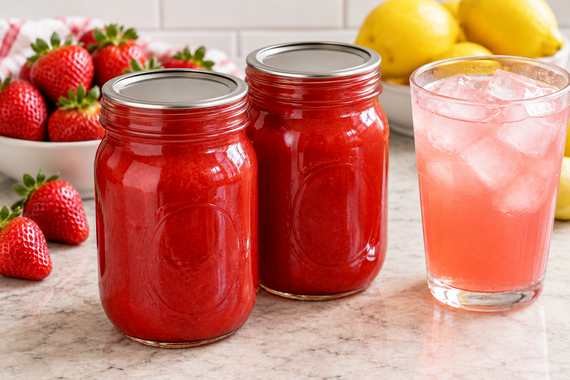

Strawberry Lemonade Concentrate Canning
Ingredients
Equipment
Method
- Set up a boiling-water canner with its rack. Wash and inspect pint canning jars; keep them hot in simmering water. Prepare new lids according to their manufacturer.

- Wash and hull strawberries. Measure 6 cups hulled berries before blending; puree in batches and transfer to a large stainless-steel saucepan.
- Stir in 4 cups bottled lemon juice and 6 cups granulated sugar. Bring to 190°F (88°C), stirring; do not boil. Take off heat and remove foam.
- Ladle into hot pint jars, leaving ¼ inch headspace. Release bubbles, recheck headspace, clean rims, fit lids and tighten bands with fingertips.
- Cover jars with at least 1 inch water (2 inches for processing over 30 minutes). Cover canner; start timing at a full boil: pints 15 minutes at 0–1,000 feet; 20 at 1,001–3,000; 25 at 3,001–6,000; 30 at 6,001–8,000; 35 at 8,001–10,000. Maintain the boil; if it stops, return to boiling and restart the entire adjusted time.
- Switch off heat, uncover and wait 5 minutes. Lift jars upright onto a towel. Leave undisturbed 12–24 hours; do not tighten bands or press hot lids. Remove bands, check seals, clean, label and store sealed jars cool, dark and dry. Refrigerate any correctly processed jar that failed to seal and use within several days.




Notes
Get fresh recipes in your inbox
Subscribe to PlateWiser for easy dinners, small-batch treats, and coffee recipes.
Confirm your email to join. Unsubscribe anytime.