Pumpkin Scones with a Light Vanilla Drizzle
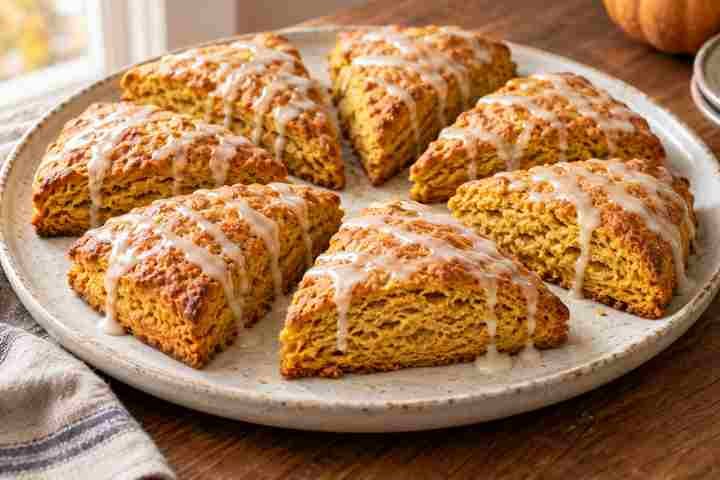
Pumpkin scones are a useful bake for a slow autumn breakfast or a Thanksgiving weekend coffee table. These wedges have lightly crisp edges, a soft crumb and a thin vanilla drizzle that adds sweetness without covering the pumpkin flavor. Cinnamon, ginger and nutmeg give the dough a warm aroma while the pumpkin keeps the centers tender.
The dough needs a gentler touch than bread dough. Cold butter should remain in small pieces, and mixing should stop while the mixture still looks a little shaggy. Pressing and folding bring it together without turning it smooth or springy.
This batch makes eight substantial scones. They are best slightly warm or at room temperature, and the unglazed wedges freeze well for another morning. The glaze is included in the quantities and nutrition below; butter, jam and other serving extras are optional.
What makes these scones tender?
Pumpkin adds both solids and moisture. Too much puree makes a soft batter that spreads instead of holding wedge shapes. The measured amount gives pumpkin scones their color and flavor while leaving enough flour to support the butter layers.
Cold butter creates small pockets as the dough bakes. Those pockets are easier to preserve when you cut the butter into the flour before adding liquid. A pastry blender works well, but fingertips can also work if you handle the mixture briefly.
A short refrigerator pause firms the cut wedges before they enter the oven. It also gives the flour a chance to absorb moisture. You do not need to knead the dough or keep adding flour until the surface looks perfectly dry.
Ingredients and what to look for
For the complete measured list, use the recipe card at the end.
- All-purpose flour, 280 g: Weigh it when possible. Scooping a cup directly into a flour bag often packs in more flour than intended.
- Light brown sugar, 70 g: It sweetens the crumb and adds a light molasses note without making the dough overly sticky.
- Baking powder, 10 g: Use baking powder rather than baking soda; they are not interchangeable here.
- Cinnamon, ginger, nutmeg and salt: These season the dough without hiding the pumpkin.
- Cold unsalted butter, 85 g: Cut into small cubes and keep chilled until needed.
- Plain pumpkin puree, 120 g: Choose unsweetened puree rather than pumpkin pie filling, which already contains sugar and spices.
- One large egg and 60 ml heavy cream: These bind and enrich the dough. An additional 15 ml cream brushes the tops.
- Alcohol-free vanilla flavoring: Use the measured amounts for dough and glaze.
- Powdered sugar and milk: A modest glaze should fall from a spoon in a thin ribbon.
If your canned pumpkin has a little separated water, stir it well before measuring. Homemade puree should be thick and spoonable, with no watery puddle. Keep leftover puree refrigerated according to its package instructions, or freeze it promptly in measured portions.
How to make pumpkin scones
1. Cut cold butter into the dry ingredients
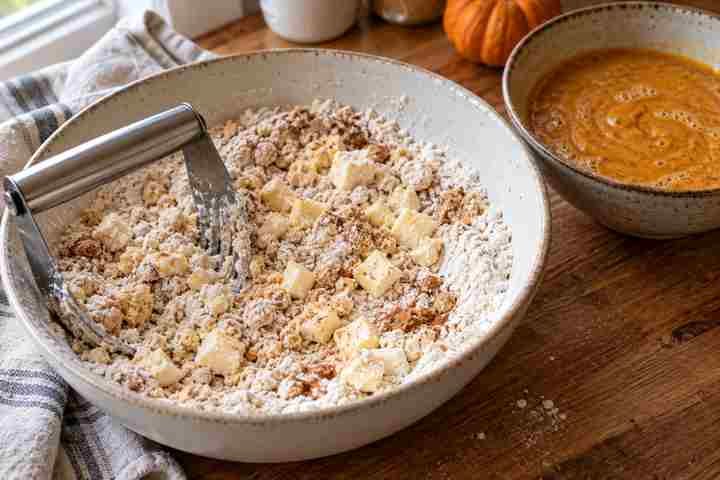
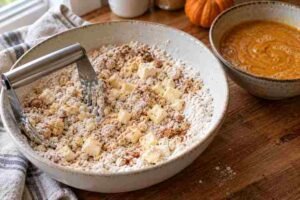
Whisk the flour, brown sugar, baking powder, spices and salt together in a large bowl. Break up any brown sugar lumps. Add the cold butter and cut it in until most pieces are about the size of peas. A few smaller pieces are fine.
In another bowl, whisk the pumpkin, egg, cream and dough vanilla until evenly combined. Add this to the flour mixture and fold with a fork or spatula. Stop when shaggy clumps form and most dry flour has been incorporated. Do not beat it into a smooth batter.
2. Shape the circle and cut eight wedges
Turn the mixture onto a lightly floured surface. Press the loose pieces together gently, fold the dough over itself once and pat it into an 8-inch (20 cm) circle about 1 inch (2.5 cm) thick. Use up to a tablespoon of extra flour only if needed to keep it from sticking.
Cut straight down into eight wedges with a sharp knife or bench scraper. Move them onto a parchment-lined baking sheet, leaving about 2 inches (5 cm) between them. Refrigerate the tray for 20 minutes while the conventional oven heats to 400 °F (200 °C).

3. Bake, cool and add the thin glaze
Brush the tops with the remaining cream. Bake on the middle rack for 20–22 minutes, until the bottoms are lightly browned, the tops look set and the centers no longer appear wet. Check near the end because ovens and dark baking sheets brown differently.
Transfer the pumpkin scones to a rack and let them cool for at least 20 minutes. Stir the powdered sugar, milk and remaining vanilla into a thin glaze. Add the extra teaspoon of milk only if needed. Drizzle over the cooled tops rather than pouring a thick blanket across them.

Easy substitutions
Whole milk can replace the cream in the dough, but the result will be less rich and the dough may feel slightly wetter. Begin with a little less and add enough to bring the shaggy pieces together. Do not use a large splash to chase a smooth texture.
A level two teaspoons of a familiar pumpkin spice blend can replace the three individual spices if its ingredients suit your household. Leave the measured salt unchanged unless the blend itself contains salt.
Do not swap coconut flour or almond flour directly for all-purpose flour. They absorb moisture and build structure differently. A flour-free or gluten-free scone needs a formula designed for that flour, rather than a casual one-for-one change.
For a plainer finish, omit the glaze and serve the wedges as they are. That changes the nutrition from the glazed estimate in the card. Avoid adding several wet mix-ins to the base dough; they can make the centers heavy.
Troubleshooting common dough problems
The dough spreads across the tray. Butter may have softened, the pumpkin may be watery or too much liquid may have been added. Keep the next batch colder, measure the puree accurately and chill the cut wedges before baking.
The finished crumb is tough. Overmixing and repeated kneading encourage a firmer texture. Fold just until the ingredients hold together, then shape with a light hand.
There are dry flour pockets. Turn the dough out and press the loose bits into the center rather than stirring the bowl for a long time. A teaspoon of cream can help a particularly dry patch, but add it gradually.
The glaze disappears into the tops. The scones are too warm or the glaze is too thin. Cool them longer and adjust the glaze with a little powdered sugar.
The outside browns before the middle sets. Move the tray away from the top element and verify the oven setting. A light-colored sheet pan is easier to manage than a very dark one.
Serving ideas for an autumn breakfast
Serve pumpkin scones with coffee, tea or warm milk. If you want a small breakfast spread, add cranberry orange yogurt muffins for a contrasting fruit flavor and baked pears with cinnamon alongside.
For another pumpkin breakfast to make on a different day, try pumpkin cottage cheese pancakes. A small bowl of cinnamon cottage cheese fruit dip with sliced fruit can add a cool option to a larger brunch table if you are serving several people.
The scones already include a sweet drizzle, so start with modest accompaniments. Soft butter or a spoonful of plain yogurt can be enough. Keep moist toppings separate until serving so the edges stay pleasantly crisp.
Storage, freezing and reheating
Cool the wedges fully before packing; trapped warmth creates condensation that softens the crust. Refrigerate in an airtight container for up to three days. Let the portion you want stand briefly at room temperature, or rewarm it gently.
Unglazed scones reheat best at 300 °F (150 °C) for about 8–10 minutes. If already glazed, warm briefly and expect the drizzle to soften. A microwave makes the crumb soft quickly, so use short bursts rather than a long cycle.
Freeze fully cooled unglazed wedges in a single layer, then transfer to a freezer container for up to two months. Thaw covered in the refrigerator and rewarm before glazing. This method avoids having to guess a baking time for frozen raw dough.
Do not taste raw dough. The FDA explains that raw flour can carry harmful bacteria; the egg is another reason to bake the mixture fully and clean utensils afterward.
Frequently asked questions
Can I use pumpkin pie filling?
Use plain puree. Pie filling changes the sugar, spices and consistency, so it will not behave like the measured ingredient here.
Why are my wedges different sizes?
Pat an even circle and mark quarters before cutting each quarter in half. Similar thickness and size help all eight pumpkin scones finish together.
Can I make smaller scones?
You can divide the dough into smaller wedges, but they will bake faster and the serving nutrition changes. Check early and use the same set-center and lightly browned-base cues.
Must I add the glaze?
No. The base is lightly sweet and can be served plain. The card estimate includes glaze, so it is not the exact nutrition for an unglazed portion.
A manageable bake for a cool morning
For tender pumpkin scones with a light vanilla glaze, weigh the flour, keep the butter cold and stop mixing before the dough turns smooth. Those practical details make the recipe useful for a Thanksgiving breakfast, a weekend coffee break or a freezer stash for another autumn morning.

Pumpkin Scones with a Light Vanilla Drizzle
Ingredients
Method
- Whisk flour, brown sugar, baking powder, cinnamon, ginger, nutmeg and salt in a large bowl. Cut in cold butter with a pastry blender until there are pea-sized pieces. In another bowl, whisk pumpkin, egg, 60 ml cream and the dough vanilla. Fold into the flour just until shaggy clumps form; do not knead smooth.

- Turn onto a lightly floured surface. Gently press together, fold once and pat into an 8-inch/20 cm circle about 1 inch/2.5 cm thick. Cut into 8 wedges and place 2 inches/5 cm apart on a parchment-lined baking sheet. Refrigerate for 20 minutes. Meanwhile, heat the oven to 400 °F (200 °C), conventional.
- Brush tops with the remaining 15 ml cream. Bake on the middle rack for 20–22 minutes, until risen, lightly browned underneath and set in the center. Move to a rack and cool for at least 20 minutes. Mix powdered sugar, 10 ml milk and glaze vanilla; add up to 5 ml more milk if needed for a thin drizzle. Drizzle over cooled scones and let set briefly.


Notes
Get fresh recipes in your inbox
Subscribe to PlateWiser for easy dinners, small-batch treats, and coffee recipes.
Confirm your email to join. Unsubscribe anytime.