Sugared Cranberries with a Crisp, Sparkling Coating
Sugared cranberries bring a crisp sugar shell and a sharp burst of fruit to a holiday dessert plate. Their appeal is the contrast: the outside looks frosty and tastes sweet, while the fresh berry inside stays pleasantly tart. A small handful can finish a cake, brighten a bowl of yogurt or sit beside cookies on a Thanksgiving or Christmas platter.
This recipe uses a light syrup dip followed by a separate sugar coating. The important detail is letting the syrup cool before the berries go in. They should become lightly sticky, rather than cook until they split. A drying pause then gives the coating something to grip without turning it into a wet crust.
The batch makes twelve small garnish portions. These berries are an accent rather than a large fruit serving, and they are best made close to the day you plan to use them.
What gives the coating its sparkle?
Granulated sugar catches the light because its crystals stay distinct on the berry surface. Powdered sugar dissolves too quickly and creates a cloudy coating; very coarse decorating sugar can leave bare patches. Ordinary white granulated sugar is a useful middle ground.
The syrup underneath should feel tacky, like a thin layer of glue. If it is still dripping, the coating sugar dissolves. If it has dried completely, the crystals fall away. Check one berry before rolling the whole batch: a few crystals should stick immediately, with no puddle forming beneath it.
Sugared cranberries also depend on intact fruit. A soft, split berry releases juice that makes the nearby sugar wet. Sorting the fruit carefully is a small step that makes the finished bowl much neater.
Ingredients and helpful notes
Use the exact quantities in the recipe card below. Keep the two portions of sugar separate so the syrup and final coating do different jobs.
- Fresh cranberries, 170 g: Choose firm berries with smooth skins. Rinse them under running water and dry well. Discard moldy, leaking or badly bruised fruit.
- Granulated sugar, 100 g for syrup: Dissolving this in the water creates a thin coating that spreads across the fruit.
- Water, 120 ml: Plain water keeps the flavor clean and lets the cranberry tartness remain the main note.
- Granulated sugar, 100 g for rolling: A shallow bowl makes it easier to turn a few berries at a time. Some sugar will remain in the bowl.
There is no gelatin, egg, flour or alcohol in this recipe. Any dessert served underneath the berries has its own ingredient and allergen considerations. Use clean utensils and a clean rack because the fruit is not fully cooked.
The FDA recommends washing produce under running water, without soap or detergent. Drying after washing is especially helpful here because stray water dilutes the syrup layer.
How to make sugared cranberries
1. Wash the fruit and dissolve the syrup sugar
Rinse and sort the cranberries, then spread them on a clean towel and pat them dry. Combine the syrup sugar with the measured water in a small saucepan. Warm gently, stirring until the sugar has dissolved, about 3–5 minutes. There is no need to boil hard or reduce it into a thick candy syrup.
Remove the pan from the heat and let it cool until lukewarm, about 15 minutes. Hot syrup can crack the skins and soften the fruit. If you are unsure, wait until the pan no longer feels hot and the syrup is comfortably warm rather than steaming.

2. Dip briefly, then dry until tacky
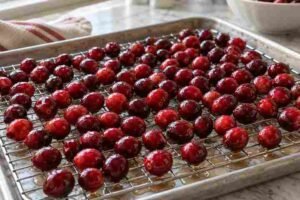
Stir the dry berries into the lukewarm syrup for about 30 seconds. Lift them out with a slotted spoon, allowing extra syrup to drain back into the pan. Arrange them in a single layer on a rack set over a rimmed tray.
Leave space between the berries. After about an hour, test the surface of one: it should feel sticky without leaving a large wet drop on your finger. Humid kitchens may need a little longer. Keep the rack away from steam from the stove or dishwasher.

3. Roll in sugar and let the coating set
Put the coating sugar in a shallow bowl. Add a small handful of berries and roll gently, using a spoon or clean dry fingers. Lift them out rather than tipping all the loose sugar onto the tray.
Spread the sugared cranberries on fresh dry parchment and leave them for about 15 minutes so the coating can settle. Handle them lightly after this point. Repeated stirring can rub off crystals or break the fruit.

Substitutions and small variations
Fresh cranberries give the most reliable intact fruit. Frozen berries release moisture as they thaw, which can leave the shell patchy or wet. Save frozen fruit for a cooked sauce or baked filling instead of treating it as a direct swap here.
Do not replace the syrup sugar with a liquid sweetener by volume. Honey and maple syrup have different moisture and flavor, so the resulting surface will behave differently. Brown sugar also makes a darker, less sparkling coating.
For a citrus accent, add a broad strip of washed orange peel while warming the syrup, then remove it before dipping the berries. Avoid adding orange juice directly to the finished sugar bowl. The basic recipe needs no flavoring, and the tart fruit is useful beside rich desserts.
Troubleshooting the sugar shell
The sugar melts into clear patches. The berries are too wet, the syrup was too warm or the surrounding air is humid. Return the uncoated berries to the rack until tacky. For already coated fruit, let it dry before adding a very light second roll in fresh sugar.
The sugar will not stick. The syrup layer has dried too far. Dip the affected berries briefly in a little cooled syrup, drain thoroughly and repeat the tacky stage.
The berries have split. Remove them from the garnish batch. Use intact berries for sugared cranberries, and keep syrup lukewarm rather than hot.
The coating clumps. Work in smaller batches and replace wet coating sugar as needed. Do not keep adding fresh dry sugar to a bowl that has become syrupy.
Ways to serve them
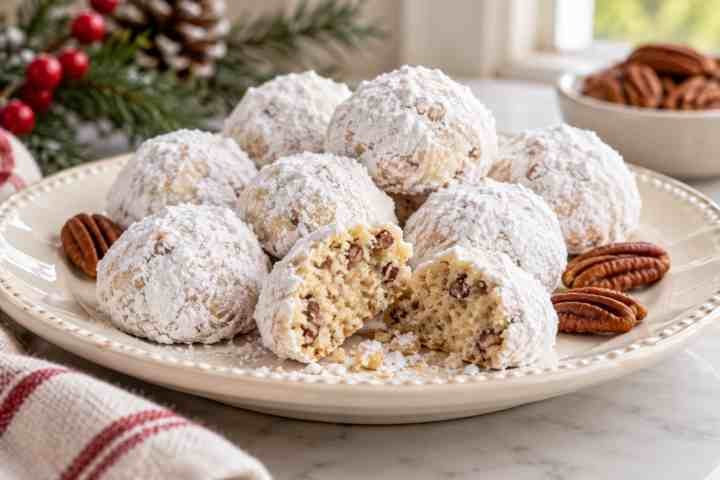
Add the berries shortly before serving so moisture from frosting or yogurt does not dissolve the sugar. A few on top of baked pears with cinnamon give a bright contrast to the warm fruit. For a holiday dessert board, place a small bowl beside peppermint bark and pecan snowball cookies.
They can also accompany cinnamon cottage cheese fruit dip, but keep the berries separate until someone is ready to eat. Wet dip softens the coating quickly. Avoid stirring a whole batch into a creamy dessert long before serving.
Storage and make-ahead advice
Refrigerate leftovers in a shallow container at 40 °F (4 °C) or below and use within two days. Let the coating set before packing, and avoid stacking heavy layers of berries. A piece of parchment between layers reduces rubbing.
Condensation can make the sugar look damp after chilling. Take out only what you plan to serve, let that portion stand briefly and add a light dusting of fresh sugar if needed. This refreshes appearance; it does not extend storage time.
Do not freeze the finished garnish. Thawing damages the texture and makes the shell dissolve. No reheating is needed. This is a fresh-fruit recipe, not a shelf-stable preserve or a canning process.
Frequently asked questions
Can I eat the cranberries without cooking them?
Yes, sound fresh cranberries can be eaten after washing, but they remain very tart. The syrup dip does not cook them through. Serve small amounts, and follow ordinary fresh-produce handling.
Can I make them the night before?
Yes. Make the batch, let the coating set and refrigerate it as described above. For the crispest appearance, finish the coating near serving time when practical.
What happens to the extra syrup?
The nutrition estimate allows for a portion of the syrup and coating sugar staying on the fruit; the actual amount varies. Do not count leftover syrup as part of the garnish yield. If keeping it for another use, refrigerate promptly in a clean covered container and use within two days.
Can I put them directly into a drink?
You can add a few to an alcohol-free drink immediately before serving, but the sugar dissolves quickly in liquid. They work better as a last-minute garnish than as something left soaking in a pitcher.
A small finishing touch for holiday desserts
A successful batch of sugared cranberries relies on dry fruit, lukewarm syrup and patience at the tacky stage. Keep the portions small, add the berries near serving time and enjoy the contrast of tart centers and crisp sugar on a Thanksgiving dessert board or Christmas cookie platter.


Sugared Cranberries with a Crisp, Sparkling Coating
Ingredients
Method
- Rinse the cranberries under running water, discard damaged berries and dry thoroughly. Combine 100 g sugar and 120 ml water in a small saucepan. Heat gently, stirring, just until the sugar dissolves, about 3–5 minutes. Remove from the heat and cool until lukewarm, about 15 minutes; do not add berries to boiling syrup.

- Stir the dry cranberries into the lukewarm syrup for 30 seconds. Lift them out with a slotted spoon and spread in one layer on a wire rack over a rimmed tray. Let drain and dry for about 60 minutes, until tacky but no longer dripping. Keep the berries separated.
- Put the coating sugar in a shallow bowl. Roll a small handful of tacky berries at a time in the sugar, lifting them out onto a clean dry parchment-lined tray. Let set for about 15 minutes. Serve as a small garnish; refrigerate leftovers in a shallow container for up to 2 days.

Notes
Get fresh recipes in your inbox
Subscribe to PlateWiser for easy dinners, small-batch treats, and coffee recipes.
Confirm your email to join. Unsubscribe anytime.