Peppermint Bark with Dark and White Chocolate
Peppermint bark is a holiday sweet that earns its place through contrast: a crisp dark chocolate base, a creamy white chocolate layer and a little crunch from crushed peppermint candy. This version keeps the ingredient list to three items and gets its mint flavor from the candy rather than an extract.
The layers are thin enough to break into snack-size pieces but thick enough to show a clear dark-and-white edge. It is useful for a Christmas dessert plate, a small homemade gift or a sweet finish after dinner. The main trick is managing the warmth of the chocolate so the layers stick together.
What makes a good two-layer bark?
The best peppermint bark has distinct layers that stay attached when you break the slab. Start with real chocolate, dry equipment and a dark layer that is just firm enough to support the white chocolate. A very cold, hard base can separate from its topping.
This is a simple chilled chocolate sweet, not a tempered confection designed to sit in a warm shop window. Keep it cool for the cleanest texture. A few pale streaks from temperature changes affect appearance more than flavor, but careful storage helps keep the finish attractive.
Ingredients and choosing chocolate
Use 200 g dark chocolate, 200 g white chocolate and 40 g hard peppermint candies. Choose a dark chocolate around 50–60% cocoa for a balance of sweetness and cocoa flavor. A very bitter bar can dominate the white layer, particularly when the pieces are small.
Read the white chocolate label and look for cocoa butter. Some white baking chips and candy coatings are formulated differently and do not melt or set in the same way. If you choose a coating product instead, follow its own melting instructions rather than treating it as identical to white chocolate.
Chop both chocolates into small, fairly even pieces so they soften at a similar rate. Keep the bowls separate and completely dry. Even a little water introduced during melting can turn chocolate thick and grainy, which makes spreading thin layers difficult.
Crush the candies inside a sturdy bag with a rolling pin, then separate very large shards. Aim for small crunchy pieces rather than only fine powder. Check the candy ingredients for your dietary needs, and avoid soft mint sweets, which do not give the same crisp topping.
Equipment and layer thickness
A small baking sheet, parchment, two microwave-safe bowls and an offset spatula are enough. Mark an 8-by-10-inch rectangle on the underside of the parchment if you want a guide. The mark should face the baking sheet, away from the food.
You do not need to spread chocolate to the edges of the tray. Keeping it within the rectangle gives both layers a manageable thickness. A much larger rectangle makes fragile bark; a much smaller one makes thick pieces that are harder to bite cleanly.
Method
1. Melt and spread the dark chocolate
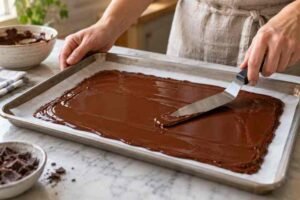
Melt the chopped dark chocolate at half microwave power in 20-second bursts, stirring thoroughly between each one. Stop heating before every piece has disappeared; the warmth in the bowl can melt the final small pieces as you stir.
Spread the chocolate evenly over the parchment rectangle. Refrigerate for 8–12 minutes, checking for a surface that can support the next layer but still feels slightly tacky. It should not be deeply chilled or frosty.

2. Add a gentle white layer
Use a separate dry bowl and melt the white chocolate at half power in 15-second bursts. Stir often because white chocolate scorches easily. When it is smooth, let it stand for 2–3 minutes so it is warm and spreadable rather than very hot.
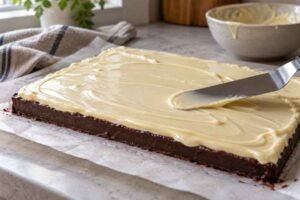
Spoon it over the dark base in several places, then connect the patches with light strokes. Avoid dragging the spatula down through the base. A little marbling at an edge is harmless, but repeated heavy passes can mix the layers.

3. Scatter, set and break
Add the candy while the white chocolate is still soft. Press the pieces in very lightly with the back of a clean, dry spoon. Refrigerate for 45–60 minutes, or until the slab is completely firm.
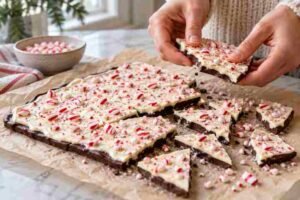
Let it stand out for 5 minutes before breaking into about 20 pieces. Bend gently from the edges rather than striking the slab hard. Irregular pieces are part of the appeal; use total weight if you need more even gift portions.

Preventing separated layers
If the dark layer has become completely hard and cold, let it stand briefly at room temperature until it loses the chill before adding the topping. Do not leave it so long that it becomes liquid again. The goal is contact between layers without melting them into one another.
White chocolate that is too hot can soften the dark base excessively. White chocolate that has cooled too far can drag instead of spreading. If it thickens in the bowl, warm it very briefly and stir before trying again.
Variations that keep the recipe clear
For a milder base, use semisweet chocolate instead of a stronger dark bar. Milk chocolate is sweeter and softer, so expect a different balance. Keep the same weight and store the finished bark cool.
For a smaller batch, halve every ingredient and spread over half the marked area. Keeping approximately the same thickness gives a similar bite and setting behavior. Avoid spreading the half batch over the full rectangle.
Leave out the crushed candy for plain layered chocolate bark, but recognize that it will no longer have peppermint flavor. This recipe does not include peppermint oil or extract, and water-based flavorings should not be stirred casually into melted chocolate.
Troubleshooting
Thick, gritty chocolate can result from moisture or overheating. Stop and inspect the bowl and utensils before continuing. Do not add a splash of water or milk to rescue chocolate intended for crisp bark; that changes the product into something softer.
If candy pieces fall off, they may have been added after the top began setting. Scatter them immediately after spreading the white layer and press gently. Very large chunks are also more likely to detach when the bark breaks.
Sticky candy usually indicates humidity or repeated temperature changes. Store the pieces airtight, and let the closed container lose its chill before opening it. That reduces condensation settling directly on the chocolate and candy.
Storage and holiday gifting
Store peppermint bark in an airtight container in the refrigerator for up to two weeks for best quality. Separate layers with parchment to protect the surface. Keep it away from strong-smelling foods because chocolate readily picks up surrounding aromas.
For longer keeping, freeze in a well-sealed container for up to one month for best texture. Thaw in the refrigerator while still sealed, then let the container stand briefly before opening. Repeated freezing and thawing can affect the finish.
Package only fully set pieces. Use food-safe bags or lined tins, include an ingredient list and note that the chocolate may contain milk, soy or other allergens. Do not call a batch nut-free unless every ingredient and your preparation space support that claim.
Serving ideas
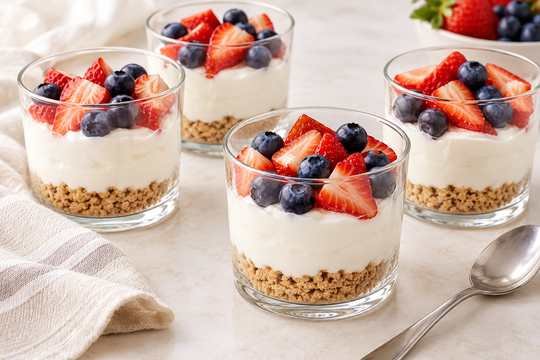
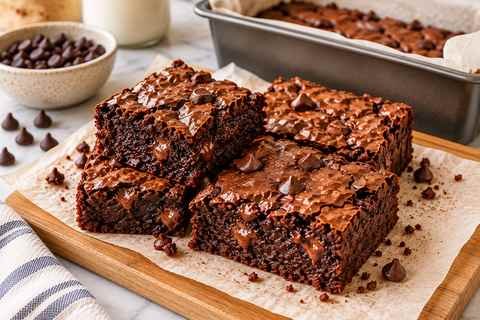
Put a few small pieces beside cranberry latte for a holiday coffee break. For a dessert selection with softer textures, add small-batch brownies or Greek yogurt dessert cups.
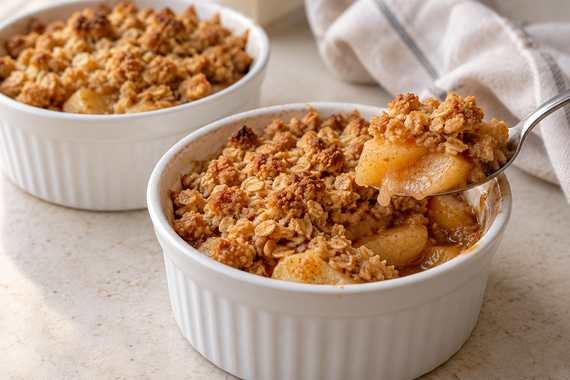
A plate of baked pears with cinnamon gives guests a fruit-based option alongside the chocolate. Keep the bark separate from warm desserts until serving so the pieces retain their snap.
Frequently asked questions
Can I use chocolate chips?
Some chips melt more thickly because they are designed to hold their shape. Chopped bars are easier to spread. If using chips, read the package and melt gently rather than adding extra heat to force them smooth.
Do I need peppermint extract?
No. Crushed hard peppermint candy supplies the mint flavor in this recipe. The result is milder than bark made with added peppermint oil.
Why did the layers come apart?
The dark base may have been too cold or fully set when the white layer was added. Aim for a firm but slightly tacky surface and a warm, gently spread topping.
Can it sit in a gift box?
Use it for short periods in a cool place, away from direct sun and heaters. Refrigerated storage is more reliable for this untempered version, especially in warm homes.
A simple chocolate gift for Christmas
Make peppermint bark with thin, even layers and a light scattering of candy, then give it enough time to set before packing. Dry bowls, gentle heat and cool airtight storage are the details that make this dark and white chocolate Christmas bark easier to share.


Peppermint Bark with Dark and White Chocolate
Ingredients
Method
- Line a small baking sheet with parchment. Melt the dark chocolate in a dry microwave-safe bowl in 20-second bursts at half power, stirring between bursts until smooth. Spread into an approximately 8-by-10-inch rectangle. Refrigerate for 8–12 minutes until firm enough to support the topping but still slightly tacky, not ice-cold.

- Melt the white chocolate in a separate completely dry bowl in 15-second bursts at half power, stirring often. Stop when a few soft pieces remain and stir until smooth. Let it stand for 2–3 minutes, then spread gently over the dark layer without pressing deeply.
- Scatter the crushed peppermint candies over the soft white chocolate and press very lightly with a clean dry spoon. Refrigerate for 45–60 minutes until fully firm. Let the slab stand at room temperature for 5 minutes, then break into about 20 pieces. Keep airtight and cool.
Notes
Get fresh recipes in your inbox
Subscribe to PlateWiser for easy dinners, small-batch treats, and coffee recipes.
Confirm your email to join. Unsubscribe anytime.